César Milstein was an Argentine scientist from Bahía Blanca, Argentina with PhDs in Chemistry from the University of Buenos Aires and the University of Cambridge, whose research spanned enzymes, antibody structure and the immune system.
In 1975, together with Georges Köhler, he developed the technique for producing monoclonal antibodies, which transformed biological research and is now essential to the diagnosis and treatment of many diseases.
He received the Nobel Prize in Physiology or Medicine in 1984, shared with Köhler and Niels Kaj Jerne.
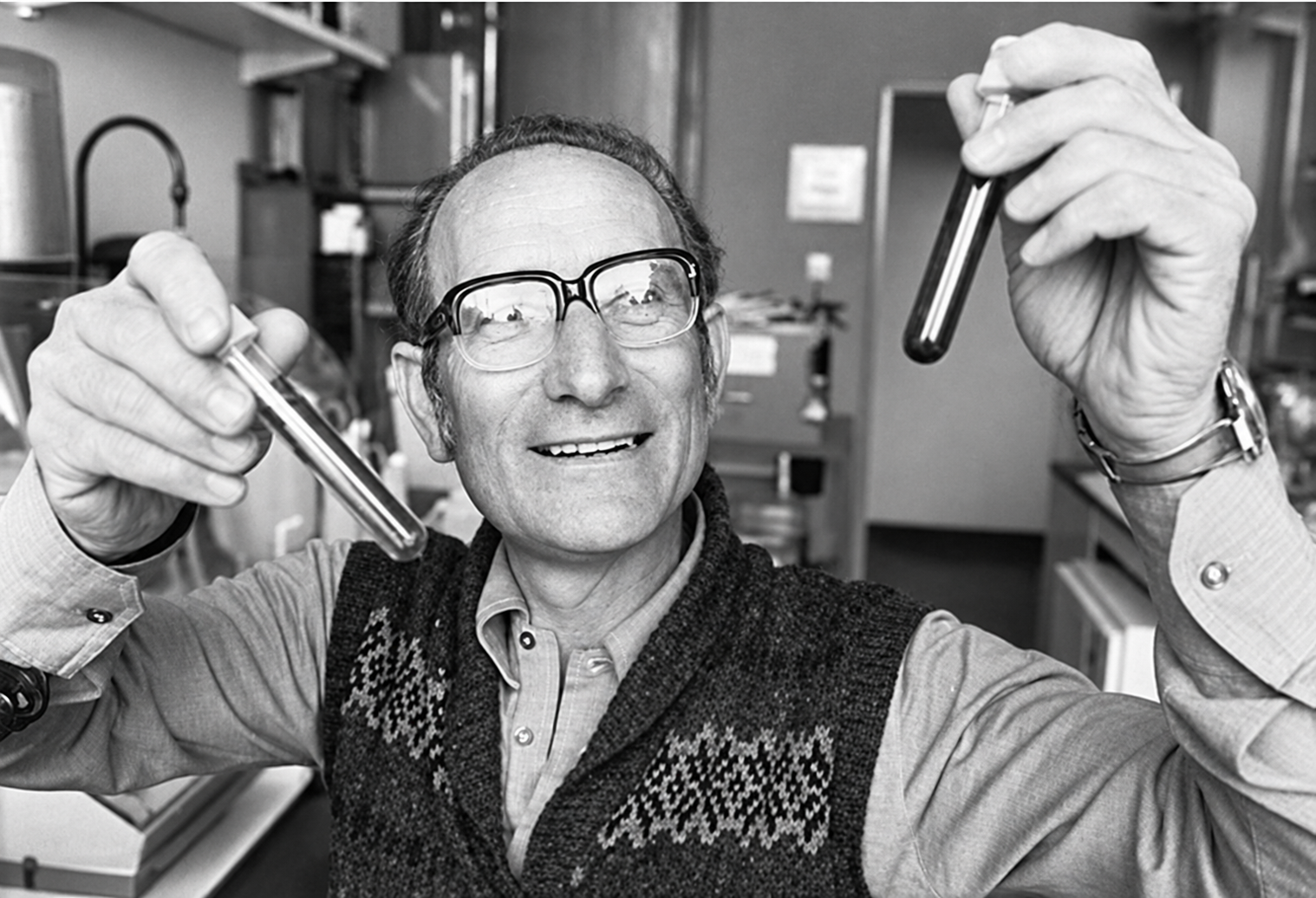
César in his own words
“My father was a Jewish immigrant who settled in Argentina, and was left to his own devices at the age of 15. My mother was a teacher, herself the daughter of a poor immigrant family. For both my mother and my father, no sacrifice was too hard to make sure that their three sons (I was the middle one) would go to university. I wasn’t a particularly brilliant student, but on the other hand I was very active in Student Union affairs and in student politics. It was in this way that I met my wife, Celia. After graduation, we married, and took a full year off in a most unusual and romantic honeymoon, hitch-hiking our way through most countries in Europe, including a couple of months working in Israel kibbutzim.
As we returned to Argentina, I started seriously to work towards a doctoral degree under the direction of Professor Stoppani, the Professor of Biochemistry at the Medical School. My PhD thesis work was done with no economic support. Both Celia and I worked part-time doing clinical biochemistry, between us earning just enough to keep us going. My thesis was on kinetics studies with the enzyme aldehyde dehydrogenase. When that was finished, I was granted a British Council Fellowship to work under the supervision of Malcolm Dixon. There, in the Department of Biochemistry at the University of Cambridge, I started a project on the mechanism of metal activation of the enzyme phosphoglucomutase. It was through that enzyme that I started to collaborate with Fred Sanger. I have described this collaboration in some detail previously (Lynen Lecture; Miami Winter Symp. Proc., In: “From gene to protein: translation into biotechnology”; Ed. W. Whelan, Academic Press, 1982). It was after completing my PhD thesis that I took a short-term appointment with the Medical Research Council in Sanger’s group, and then returned to Argentina for a period of two years. During that period I extended my studies of mechanisms of enzyme action to the enzymes phosphoglyceromutase and alkaline phosphatase. It was then that I had my first experience at directing other people’s work, including my first research student.
The political persecution of liberal intellectuals and scientists manifested itself as a vendetta against the director of the institute where I was working. This forced my resignation and return to Cambridge to rejoin Fred Sanger, who by then had been appointed Head of the Division of Protein Chemistry in the newly-formed Laboratory of Molecular Biology of the Medical Research Council. Following his suggestion, I shifted my interests from enzymology to immunology. The evolution of my research in this area is described in the Lynen Lecture as mentioned above and in the Nobel Lecture”
“Science will only fulfill its promises when the benefits are equally shared by the really poor of the world”
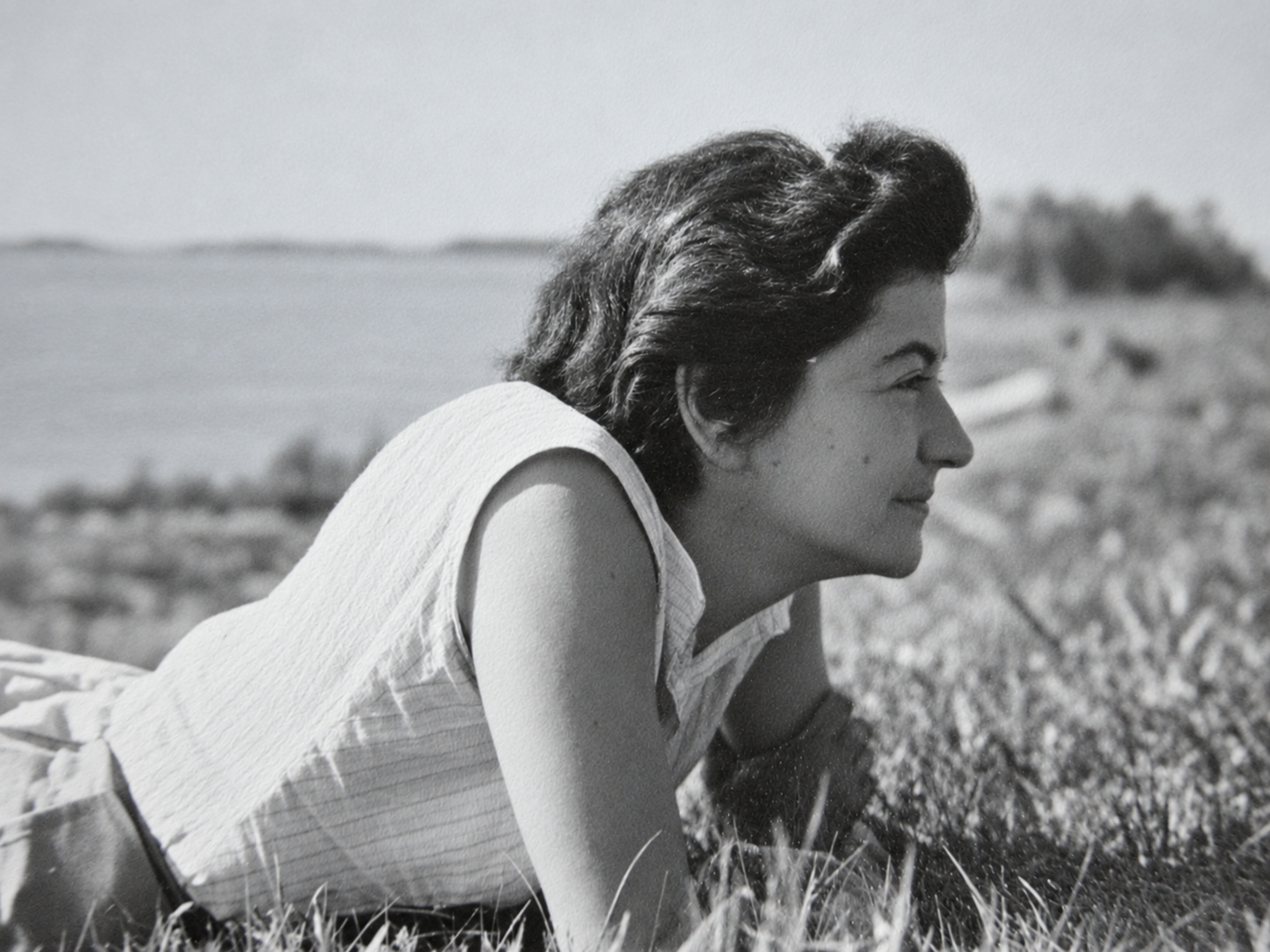
Celia in her own words
“My parents came with their families from Ukraine and met in Argentina where I was born. I was born in Lanús, (in the outskirts of the city of Buenos Aires) in 1928 and I grew up there until I was 10 years old. At that age I entered the boarding school Guido Spano where I finished primary school and started high school. I continued at Liceo No.1 and finished at Liceo No.3 in the city of Buenos Aires.
I entered the Faculty of Exact, Physical and Natural Sciences of the University of Buenos Aires in 1946. I graduated with a degree in Chemistry in March 1951.
I met César Milstein in the University where we were both interested in the student movement, and we ended up getting married in June 1953. We left on a wedding trip to Europe, where we spent a year working, camping and hitchhiking. During that year we got to know Western Europe and Israel.
We returned to Argentina, where I joined Dr Pirosky's lab to work on vitamin B12.
In October 1958 I travelled with my husband to Cambridge, England and joined the Department of Biochemistry at the University of Cambridge, where I did a Master in Science funded by the National Council for Scientific and Technical Research, under the direction of Dr. Kenneth Bailey. The subject was Tropomyosin from Pinna nobilis.
Back in Buenos Aires I did my PhD in Chemistry at the Malbrán Institute. The topic was Isolation and characterisation of paramyosin from Aulacomya. Due to the intervention of the Institute by the authorities, my husband and I left the country in 1963 for Cambridge, England again.
In Cambridge I was placed at the Institute of Animal Physiology (Babraham) where I started working on Substance P with Sir John Henry Gaddum. On Sir John's death I started work on protein structure.
In 1982 I introduced the study of deoxyribonucleic acid sequencing at Babraham, where I did research until October 1985. The director at the time, Dr Barry Cross, felt that my husband was doing too well (he had just won the Nobel Prize in Medicine or Physiology) and therefore I could stop working (another word for sexual discrimination). I was taken in by the Dept. of Pathology at Cambridge University where I continued to work until 1988”